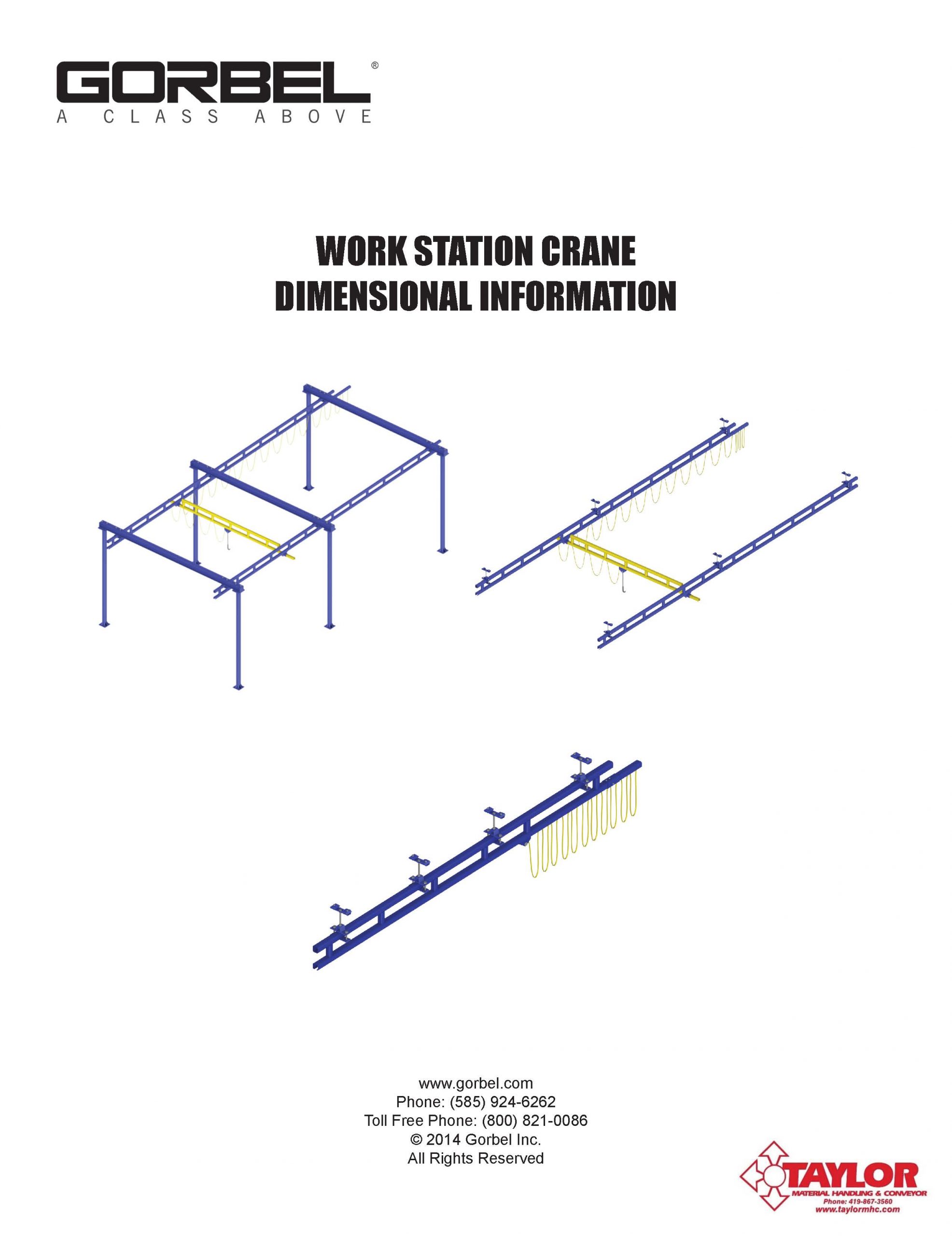






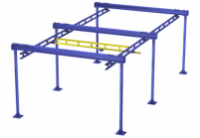
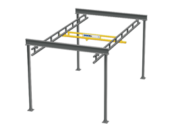
Gorbel Free Standing Work Station Bridge Cranes can handle the toughest overhead lifting tasks. These cranes, which can be installed on any normal 6-inch reinforced conrete floor, feature a pre-engineered modular design that can easily expand as your work centers expand. Gorbel’s capacities range from 250 to 4000 lbs. with bridge lengths from 4 ft to 34 ft. Designed to be completely free standing and do not require sway bracing. Multiple bridges can be installed on one runway system to increase productivity and flexibility in a work area.
For Over 50 Years, One of America’s Local Leading Integrators of Conveyor and Material Handling Equipment
Planning a Crane System For Your Workstation and Facility? |
||||
|
|
||||
|
Free Crane Buyer’s Guide and 100 FAQ’s Report
Reports prepared by Taylor Material Handling and Conveyor Taylormhc.com Serving Northwest Ohio, Northern Indiana, and Southeastern Michigan. Call (419) 867-3560 today for a FREE crane consultation. Get expert recommendations tailored to your facility. Discover how workstation cranes and bridge cranes can work together to improve efficiency, safety, and productivity. |
||||
|
Call (419) 867-3560 today for a FREE crane consultation
Cranes are mission-critical systems used to safely move heavy materials across industrial environments. Choosing the right system is not simply about lifting capacity—it involves understanding workflow, structural requirements, and long-term return on investment. This guide is designed to help buyers make informed decisions that improve productivity while maintaining safety. In today’s facilities, workstation cranes are also becoming a preferred solution for many repetitive lifting tasks, offering flexibility and ergonomic advantages. While bridge cranes handle large-scale lifting, workstation cranes often complement them by improving efficiency at individual workstations. A bridge crane system consists of runways, bridge girders, a trolley, and a hoist. These components work together to allow movement in three axes: vertical, horizontal across the bridge, and longitudinal along the runway. This creates full coverage of a facility. In many operations, bridge cranes are paired with workstation cranes to handle lighter, repetitive tasks. This approach improves workflow by assigning heavy lifts to bridge cranes and precision handling to workstation cranes, creating a balanced system. |
||||
|
Call (419) 867-3560 today for a FREE crane consultation |
||||
 Call (419) 867-3560 today for a FREE crane consultation. Get expert recommendations tailored to your facility. Discover how workstation cranes and bridge cranes can work together to improve efficiency, safety, and productivity. |
||||
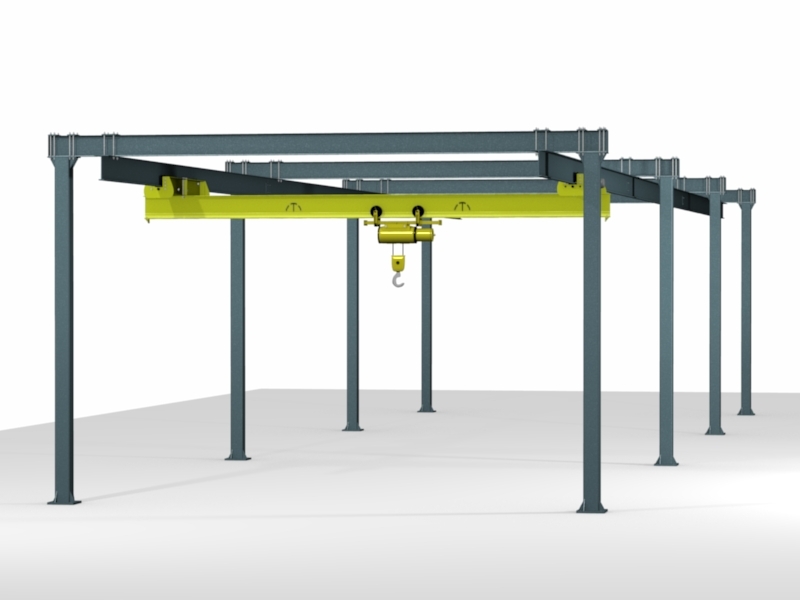 Bridge Cranes, Free Standing Workstation Bridge Cranes Gorbel Distributor, Ceiling Mounted Workstation Bridge Cranes, Accessories 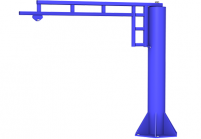
Jib Cranes, Free Standing, Motorized, Articulating, Portable Wall Cantilever Jib Cranes, Gorbel Distributor 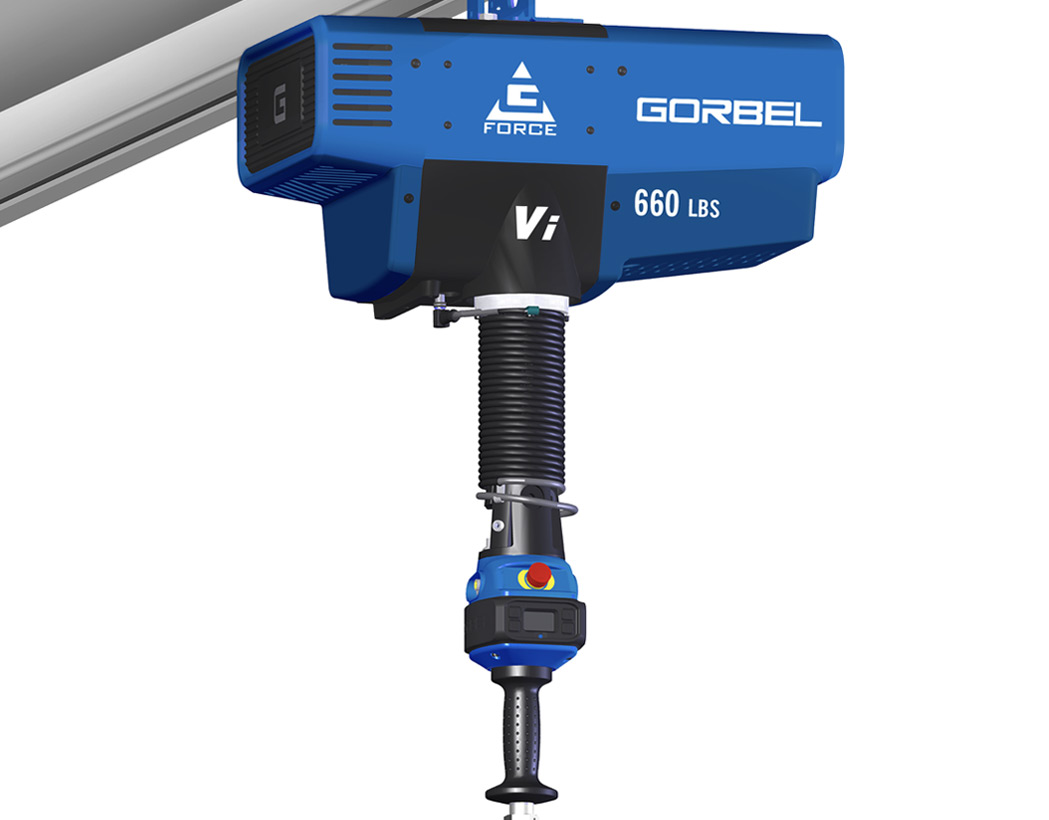
Intelligent Lifting Devices – Gorbel and Cleveland Tramrail Distributors – G-Force Q, iQ Ergonomic Overhead Lifting, Easy Arm, Free Standing G-Jib Crane. 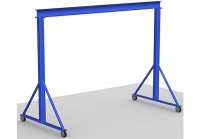
Gantry Cranes, Adjustable, Fixed Height, Steel, Aluminum, 1 Ton, 2, 3, 4, 5 Gorbel/Spanco Dealers/Distributors 100 Questions a Buyer Might Ask Before Purchasing a Bridge CraneWhat is a bridge crane and how does it work? – A bridge crane is an overhead lifting system consisting of parallel runways with a traveling bridge that carries a hoist. The hoist moves along the bridge while the bridge travels along the runway, allowing loads to be lifted and moved in multiple directions within a facility. What lifting capacity do I need for my application? – The required capacity depends on the heaviest load you expect to lift. Buyers usually include a safety margin above the maximum load to allow for rigging weight and occasional heavier lifts. What span should the bridge crane have? – The span is the distance between runway rails and normally matches the width of the area where lifting will occur. The span must be engineered to support the crane load and the weight of the bridge. What hook height is required for my operation? – Hook height refers to the maximum distance the hook can be raised. It must allow the load to clear obstacles such as machines, trucks, or storage racks. What type of bridge crane should I consider? – Common options include single‑girder cranes, double‑girder cranes, top‑running cranes, and under‑running cranes. The best choice depends on building structure, capacity, and lifting frequency. What is the difference between a single girder and double girder bridge crane? – A single girder crane has one main beam and is typically used for lighter loads. Double girder cranes use two beams and allow higher capacities, better hook height, and heavier duty service. What runway system is required to support the crane? – The runway system includes rails, beams, and structural supports that allow the crane bridge to travel the length of the building. It must be properly engineered to handle both static and dynamic loads. Does my building structure support a bridge crane installation? – Many cranes are mounted directly to building columns or structural steel. A structural engineer should verify that the building can safely support crane loads and forces. Should I choose a top‑running or under‑running bridge crane? – Top‑running cranes travel on rails above the runway beam and usually support heavier loads. Under‑running cranes hang below the beam and are typically used in lighter applications. What hoist type should be used with the bridge crane? – Electric chain hoists are often used for smaller capacities while electric wire rope hoists are preferred for higher lifting capacities and industrial duty cycles. What lifting speed should the hoist have? – The lifting speed depends on productivity requirements. Faster hoists improve throughput, but slower speeds may allow more precise load placement. What bridge travel speed is appropriate for my facility? – Bridge travel speed determines how quickly loads move across the building. Production environments often require higher speeds, while maintenance areas may require slower controlled movement. How much headroom is required for the crane? – Headroom is the distance between the top of the crane and the ceiling. Low‑headroom designs are available for facilities with limited vertical clearance. What duty cycle rating should the crane have? – The duty cycle describes how often the crane will operate. Industrial cranes are often rated according to CMAA duty classifications that range from light service to severe service. What safety features should be included with the crane? – Common safety features include upper and lower limit switches, overload protection devices, emergency stop controls, and warning systems. How is the crane controlled by operators? – Operators may control cranes using push‑button pendants, radio remote controls, or operator cabins depending on the size of the crane and the working environment. What electrical power requirements are needed? – Most bridge cranes require three‑phase industrial electrical power. The voltage and amperage must match the electrical supply available in the building. What type of hoist trolley should be used? – The hoist trolley moves the hoist across the bridge beam. Motorized trolleys are used in most industrial applications because they allow precise positioning of loads. What maintenance is required for a bridge crane? – Routine maintenance includes lubrication, inspection of wear components, testing of safety systems, and periodic electrical inspections. How long does installation typically take? – The installation timeline varies depending on crane size and site preparation but often ranges from a few days to several weeks. What certifications or standards should the crane meet? – Bridge cranes typically follow OSHA regulations along with engineering standards established by organizations such as CMAA and ANSI. Can a bridge crane be customized for my facility layout? – Most crane manufacturers offer custom spans, lifting heights, speeds, and controls to match the exact requirements of the facility. What type of load attachments can be used with the crane? – Attachments may include lifting hooks, vacuum lifters, magnets, spreader bars, or custom rigging devices depending on the material being handled. What training is required for crane operators? – Operators should receive formal training that includes safety procedures, equipment operation, load handling, and inspection requirements. How often should bridge cranes be inspected? – OSHA requires frequent visual inspections as well as periodic detailed inspections performed by qualified personnel. What information should I provide to a crane supplier when requesting a quote? – Buyers should provide required capacity, span, hook height, building dimensions, duty cycle expectations, and electrical specifications so the crane supplier can design an appropriate system. How does crane capacity affect price? – Higher capacity cranes require stronger steel structures, larger hoists, and heavier components, which increases the overall cost. What building measurements are needed before crane design begins? – Key measurements include building width, column spacing, ceiling height, and the available runway length. What clearances are required around the crane? – Clearances must be maintained between the crane and building structures, lighting, ventilation systems, and other equipment. How much floor space can a bridge crane save compared with forklifts? – Overhead cranes allow loads to be moved above the workspace, eliminating the need for large forklift aisles and freeing up valuable floor space. What materials are commonly used to build crane bridges? – Bridge girders are usually fabricated from structural steel designed to withstand heavy loads and repetitive lifting cycles. How does crane design reduce load sway? – Proper hoist controls, smooth acceleration, and modern variable‑frequency drives help minimize load sway during movement. Can bridge cranes be used outdoors? – Yes, cranes can be designed for outdoor environments with weather protection, corrosion‑resistant coatings, and sealed electrical systems. How are crane runways installed in a building? – Runways are typically supported by structural steel columns or by freestanding support systems designed specifically for the crane. What factors influence crane installation cost? – Installation cost depends on crane size, building modifications, electrical work, and the complexity of the runway system. Can a crane system be relocated later? – Many cranes can be relocated if the runway system and building structure allow it, although modifications may be required. How long does a bridge crane typically last? – A well‑maintained crane can operate for decades, especially if regular inspections and maintenance programs are followed. What is the role of end trucks on a bridge crane? – End trucks house the wheels that allow the bridge to travel along the runway rails. What type of wheels are used on crane systems? – Crane wheels are typically made from hardened steel designed to handle high loads and repeated travel cycles. How do variable frequency drives improve crane performance? – They provide smoother acceleration and deceleration, reducing mechanical stress and improving load control. Can cranes operate on the same runway system? – Yes, multiple cranes can share the same runway if proper spacing and anti‑collision controls are used. What anti‑collision devices are used on cranes? – Sensors and control systems detect nearby cranes and automatically slow or stop movement to prevent collisions. What type of brakes are used on hoists? – Industrial hoists use electromagnetic or mechanical brakes that automatically engage when power is removed. How are crane systems protected from overloads? – Overload protection devices monitor lifting force and prevent the hoist from lifting loads beyond its rated capacity. How does crane speed affect productivity? – Faster crane travel speeds can increase material handling efficiency in high‑volume operations. What documentation should be provided with a new crane? – Manufacturers usually provide operation manuals, inspection guidelines, load ratings, and electrical diagrams. What spare parts should be kept on hand? – Facilities often keep replacement brake components, contactors, fuses, and hoist cables available for quick repairs. How does preventive maintenance reduce downtime? – Routine inspection and servicing help identify wear or damage before failures occur. How are crane beams engineered for strength? – Engineers calculate load forces, deflection limits, and safety factors when designing crane girders. What role does a crane play in manufacturing productivity? – Overhead cranes allow materials to move quickly between workstations, reducing delays and manual handling. How do cranes improve workplace ergonomics? – They eliminate the need for workers to manually lift heavy materials, reducing strain injuries. How are cranes used in steel fabrication shops? – They lift and position heavy steel plates, beams, and assemblies during cutting, welding, and assembly. How do cranes improve warehouse efficiency? – They allow vertical storage and easy access to heavy inventory without relying on ground‑based vehicles. How do cranes reduce product damage? – Controlled lifting and positioning minimize the risk of dropping or scraping materials. How are cranes used in equipment maintenance operations? – They help lift heavy machinery components during repairs or replacement. How can cranes assist assembly line production? – Crane systems can move large components between stations while maintaining continuous workflow. How are cranes used in automotive plants? – They move engines, dies, and body components during manufacturing processes. How do cranes help handle oversized loads? – The overhead design allows large objects to move through open floor space without obstruction. How do cranes support lean manufacturing? – They streamline material flow and reduce unnecessary handling steps. How can cranes be integrated into automated facilities? – Advanced control systems allow cranes to interact with automated storage or robotic systems. How do cranes improve worker safety? – They allow heavy loads to be handled mechanically rather than manually. What industries commonly use bridge cranes? – Bridge cranes are widely used in manufacturing, steel processing, automotive plants, warehouses, and heavy fabrication facilities. How do cranes assist shipbuilding operations? – They lift large sections of vessels and heavy marine components. How are cranes used in power plants? – They move heavy turbine components and generators during installation and maintenance. How can cranes improve material handling in distribution centers? – They provide overhead movement of bulky items without interrupting forklift traffic. How do cranes support heavy machinery manufacturing? – They allow large machine components to be safely lifted and positioned during assembly. How are cranes used in aerospace manufacturing? – They lift aircraft components and tooling structures used in production. How do cranes assist with loading trucks or railcars? – They can lift large loads directly into transportation vehicles. How do cranes improve workflow in fabrication plants? – They move materials efficiently between cutting, welding, and finishing areas. How do cranes help reduce labor costs? – A single operator can move loads that would otherwise require multiple workers. How can cranes improve plant throughput? – By moving materials quickly and efficiently between processes. How do cranes assist maintenance teams? – They make it easier to lift heavy replacement parts or equipment. How are cranes used in steel service centers? – They handle large steel coils, plates, and structural shapes. How do cranes support construction material fabrication? – They lift concrete molds, rebar assemblies, and precast components. How do cranes help with precision positioning? – Hoist controls allow operators to carefully lower loads into exact positions. How do cranes reduce workplace congestion? – They eliminate the need for large ground vehicles in tight production areas. How can cranes support heavy maintenance operations? – They allow safe lifting of engines, motors, pumps, and other heavy equipment. How do cranes help move materials between floors? – They can transfer loads through vertical openings or between building levels. How do cranes improve equipment installation? – They provide controlled lifting when installing large machinery. How can cranes support production expansion? – Additional cranes can often be added to existing runway systems. How do cranes assist in die‑handling operations? – They lift heavy stamping dies safely during changeovers. How can cranes help handle fragile materials? – Slow, controlled lifting prevents sudden movement that could damage products. How do cranes improve workplace organization? – They allow materials to be stored and moved overhead rather than cluttering floor space. How can cranes improve safety in confined production areas? – They move loads above workers instead of through crowded aisles. How do cranes support equipment assembly operations? – They allow large assemblies to be rotated, positioned, and secured during production. How can cranes reduce workplace injuries? – Mechanical lifting greatly reduces the risk of back injuries and strain. How do cranes improve loading efficiency in manufacturing plants? – They allow heavy materials to be moved directly from storage to production lines. How do cranes contribute to overall plant efficiency? – They streamline material handling and reduce delays between production processes. How can cranes be adapted for specialized lifting tasks? – Custom lifting fixtures and rigging devices can be designed to handle unique materials or components. How do cranes improve overall material handling reliability? – Unlike forklifts, cranes operate on fixed runways, ensuring consistent movement paths and predictable handling operations. |
||||

Bridge Cranes
-

Gorbel Free Standing Workstation Bridge Crane
-

Spanco Free Standing Workstation Bridge Crane
Spanco Freestanding Workstation Bridge Cranes are the perfect ergonomic solution for extending lifting coverage and providing full access of movement. Our Freestanding Workstation Bridge Cranes can replace multiple cranes with one fluid system for improved efficiency and productivity.
-

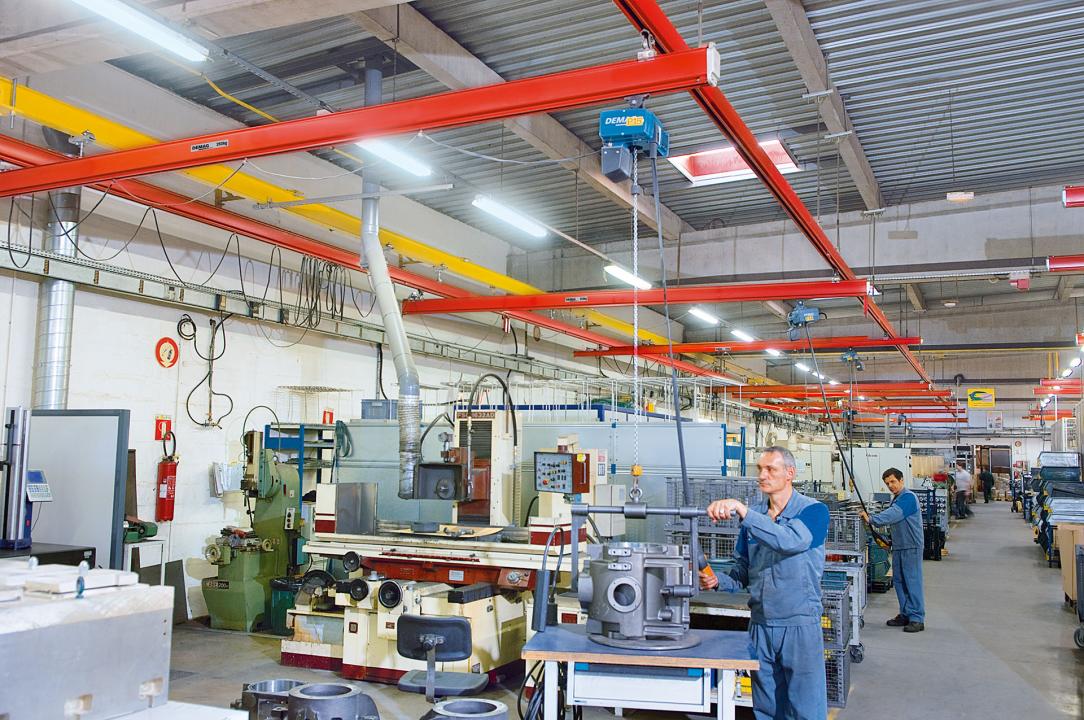
Demag KBK Modular Crane Systems
Using our KBK system, we can meet your specific application requirements precisely, quickly and efficiently. The components of our modular system can be combined to create individual suspension monorail, suspension crane, pillar and wall-mounted slewing jib crane solutions. Thanks to the system’s high flexibility, our KBK installations can be integrated easily into any production infrastructure – and modified at any time.
-

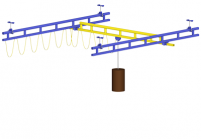
Gorbel Ceiling Mounted Workstation Bridge Crane
When a work area must be free from any support structures that may interfere with operations. Ceiling Mounted Bridge Cranes are an excellent solution to keeping floors clear. Handling capacities up to 4000 lbs. with overall lengths up 34 ft., these systems are pre-engineered and modularly designed for easy installation, expansion and relocation. Customers can install multiple bridges along one set of runways and greatly increase their productivity.
-
Spanco Ceiling Mounted Bridge Cranes
Spanco Ceiling-Mounted Workstation Bridge Cranes provide unlimited lifting coverage without sacrificing floor space or obstructing work areas. Our Ceiling-Mounted Workstation Bridge Cranes eliminate the need for steel supports, making them a cost effective and ergonomic material handling solution.
-

Tarca Pre-Engineered Crane Systems
Gorbel also offers pre-engineered Floor Supported and Ceiling Mounted Tarca Crane Systems in standard capacities from 2 to 5 tons. Tarca Systems are made with Tarca Track, which has a three piece welded construction with a compound section of mild steel top flange and web and a specially rolled high-carbon steel lower rail. Tarca is known for consistenly straight rail sections and durable, high quality components. Tarca offers unmatched versatility, durability and ease of installation.
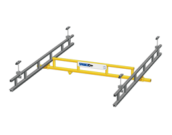
Bridge Crane Accessories
-

Telescoping Bridge Cranes
Gorbel’s telescoping bridge crane allows for extension outside the normal reach of a Gorbel Work Station Bridge Crane. The telescoping bridge is designed for effortless movement and easy installation. The bridge features an adjustable leveling device and anti-kickup wheels to prevent binding of the bridge when telescoped. Applications for a telescoping bridge include reaching into adjacent work cells to transfer material, loading parts into a machine opening, and reaching out beyond the building column or under mezzanines.
-

Gorbel Interlock Transfer Crane
Gorbel’s interloc/transfer cranes allow loads to be transferred from a bridge crane to monorail spurs and vise-versa. The interlock/transfer cranes are fast and easy to use. The bridge only engages the interlock when the operator actuates it so they do not impede the workers when not in use. The interlock is designed so the trolley stops will lock and not allow the passage of the hoist trolley until the bridge and monorail are in alignment and mechanically linked. The bridge and monorail spur cannot be seperated until the trolley stops are fully closed and in the locked position. They can be easily adapted to an existing Gorbel Work Station Bridge Crane.
-

Tarca Pre-Engineered Crane Systems
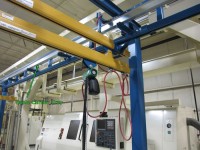
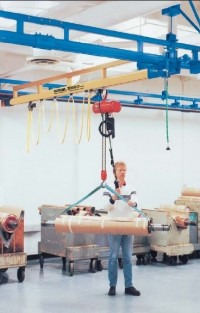
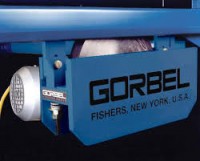
Gorbel’s tractor drives provide motorized movement on new or existing enclosed track Gorbel Work Station Bridge Cranes and Monorails. The drives are designed for indoor use and available for steel track. Applications for tractor drives include work areas where the operator cannot stand next to the load to move it by hand or during operations with high cycle times that require frequent lifting of heavy, awkwardly shaped loads.
- +Product Literature
- +Application Photos/Videos
- +
-

Workstation Crane Dimensional Information
-

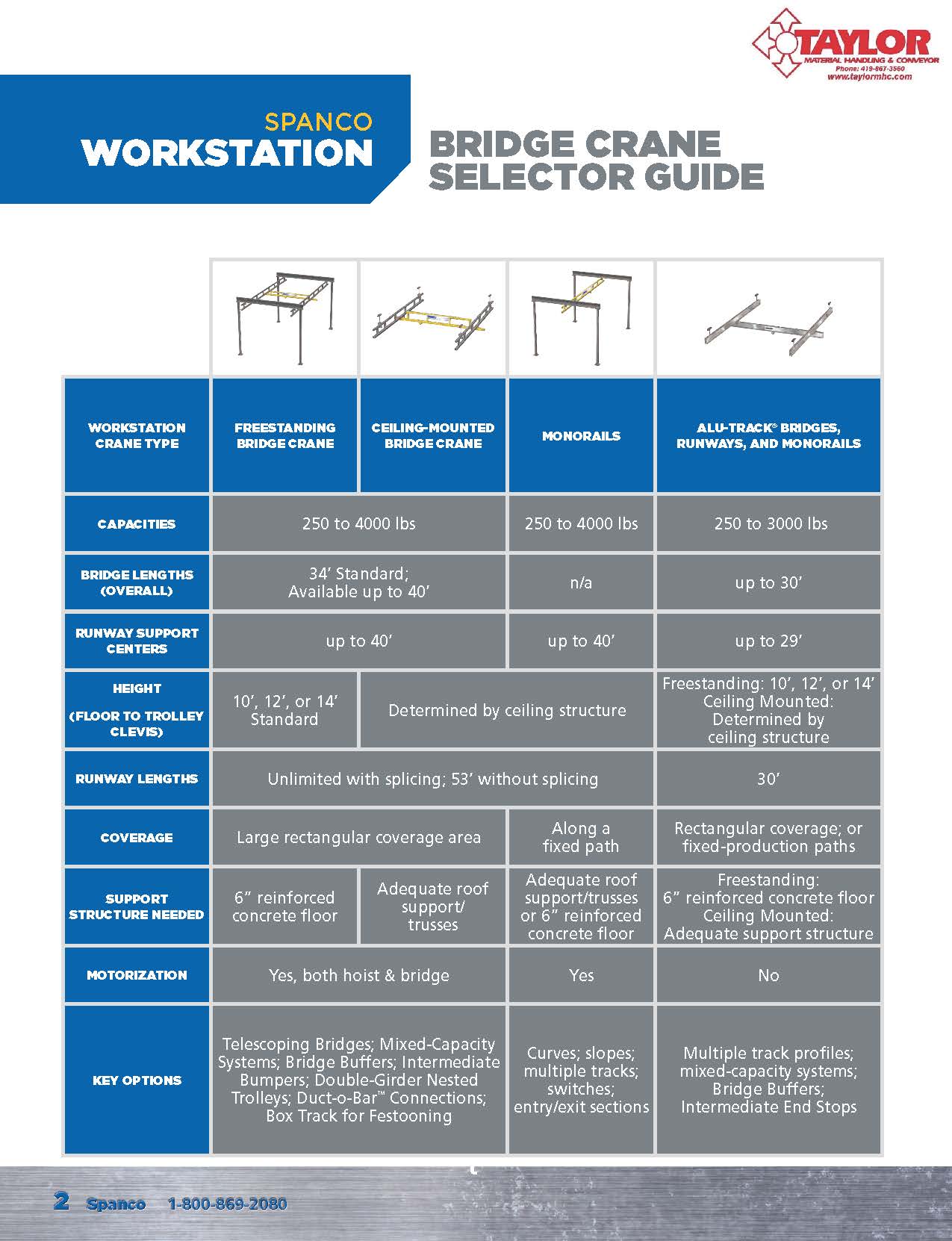
Spanco Workstation Crane Selector Guide
-

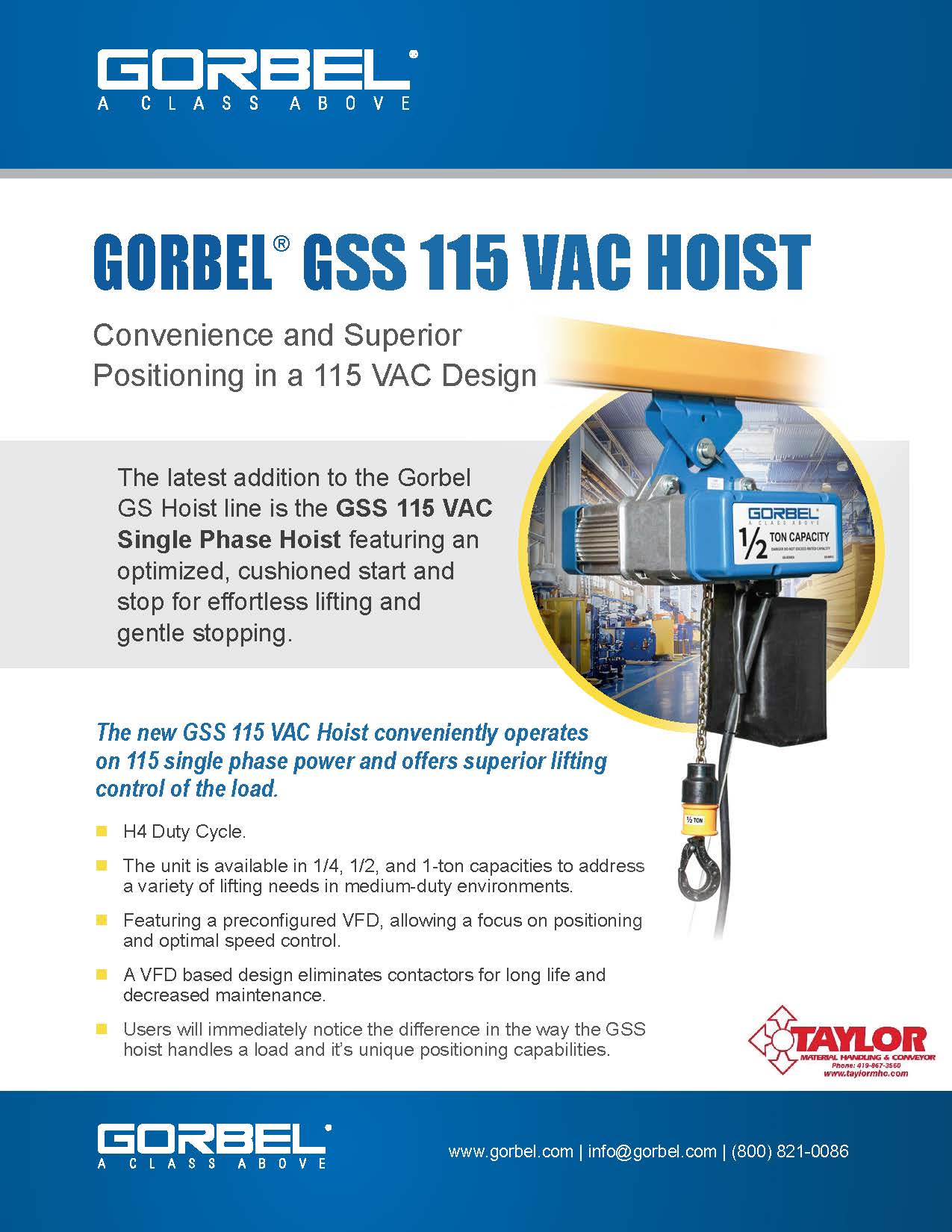
Gorbel GSS Series 115VAC Hoists
-

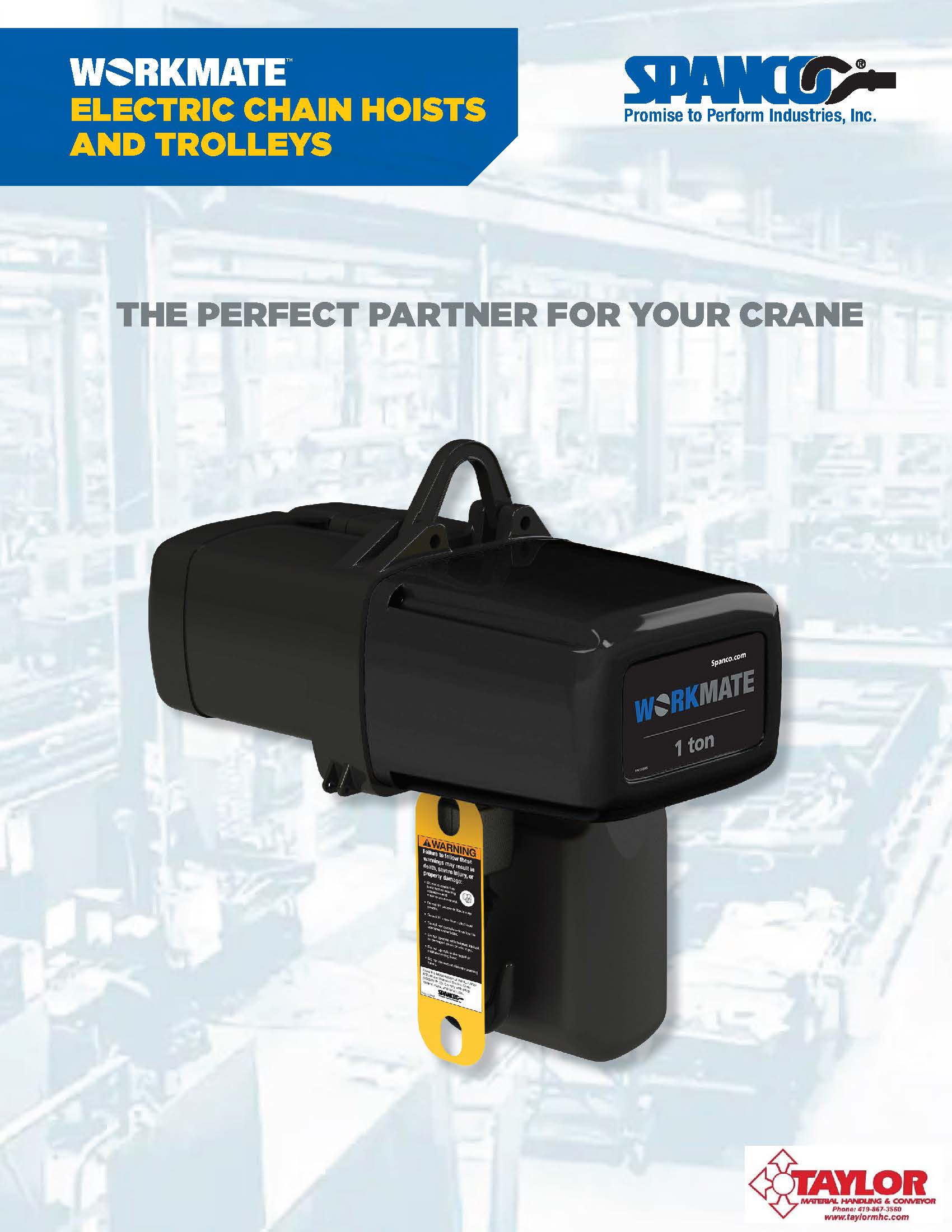
Spanco WorkMate Hoists